
API design and security are critical aspects of modern software development. A well-designed API not only provides a seamless experience for developers but also ensures the protection of sensitive data and resources.
In this article, we will explore the fundamentals of API design, including best practices for creating intuitive and scalable APIs. We will also delve into API security, discussing common vulnerabilities and strategies to mitigate them.
Basics of API Design & Security
API design focuses on creating interfaces that are easy to understand and use. This involves defining clear endpoints, using consistent naming conventions, and providing comprehensive documentation. A well-designed API should be intuitive for developers, allowing them to quickly integrate and utilize its functionality.
1️⃣ RESTful Design Basics
- Use correct HTTP methods (GET, POST, PUT/PATCH, DELETE)
- Resource-based endpoints
- Consistent naming conventions
Reference article on HTTP methods: https://blog.postman.com/what-are-http-methods/
2️⃣ Request & Response Standards
Use standard request and structured responses to make it easier for developers to understand the API's behavior and handle errors effectively.
- Use JSON consistently
- Standard response format
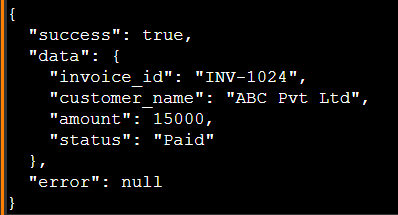
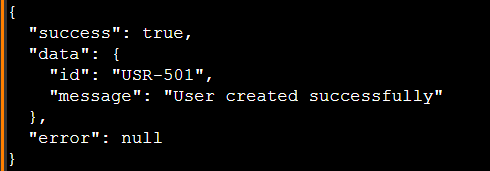
Above are examples of a standard API response format, which includes a status code, message, and data payload. This structure helps developers quickly understand the outcome of their API requests and handle any errors that may arise.
3️⃣ Status Codes (Do Not Ignore)
Always return appropriate HTTP status codes to indicate the result of an API request. This helps clients understand whether their request was successful or if there were issues that need to be addressed.
- 200 / 201 → Success
- 400 → Bad Request
- 404 → Not Found
- 500 → Internal Server Error
Reference article on HTTP status codes: https://tinyurl.com/2tavf2d4
4️⃣ Authentication & Token Rules
Implement robust authentication mechanisms to protect your API from unauthorized access. This typically involves using tokens, such as OAuth2.0 or JWT, to authenticate users and control access to resources.
- Use OAuth2.0 / JWT
- Reference article on OAuth2.0: https://oauth.net/2/
- Minimum token length: 128-bit (recommended 256-bit)
- Always sign tokens (HMAC/SHA256 or better)
Proper authentication ensures that only authorized users can access your API, while token management helps maintain security and control over who can access specific resources.
5️⃣ Token Expiry & Refresh
Implement token expiry and refresh mechanisms to enhance security. This ensures that even if a token is compromised, it will only be valid for a limited time, reducing the risk of unauthorized access.
- Access token: short-lived (15 mins minimum – 60 mins maximum)
- Refresh token: longer duration (days/weeks)
- Always support token rotation
Token expiry and refresh mechanisms help maintain the security of your API by ensuring that tokens are regularly updated and that compromised tokens cannot be used indefinitely.
6️⃣ Replay Attack Prevention
Implement measures to prevent replay attacks, where an attacker intercepts and retransmits a valid request at a later time. This can be achieved through the use of nonces, timestamps, or other mechanisms to ensure that each request is unique and timely.
- Use nonce / timestamp validation
- Implement idempotency keys for critical operations
- Reject duplicate or delayed requests
Reference article about idempotency keys: https://tinyurl.com/4hmsf26y
7️⃣ Rate Limiting & Abuse Control
Implement rate limiting and abuse control mechanisms to prevent excessive usage of your API and protect against malicious activities.
- Limit requests per IP/user/min. Example, 10 requests per minute from per IP
- Detect multiple login attempts from same IP
- Apply throttling / temporary blocking, Example, 5 failed logins → lock for 15 minutes
Rate limiting and abuse control help maintain the performance and security of your API by preventing excessive or malicious usage that could degrade service for other users.
8️⃣ Data Protection
Implement data protection measures to ensure the confidentiality and integrity of sensitive information.
- Always use HTTPS (no exceptions)
- Encrypt sensitive data at rest
- Never expose secrets in frontend or logs
Data protection is essential for maintaining the trust of your users and ensuring compliance with data privacy regulations. By encrypting sensitive data and using secure communication channels, you can protect your API from potential breaches and unauthorized access.
9️⃣ Input Validation & Sanitization
Implement input validation and sanitization mechanisms to prevent malicious input from compromising your API.
- Validate all inputs server-side
- Prevent injection attacks (SQL, XSS)
- Enforce strict schemas
Input validation and sanitization are crucial for maintaining the integrity and security of your API by ensuring that only valid and safe data is processed. Example: Use Parameterized SQL queries for SQL data handling in C#.Net to prevent SQL Injection. Reference article on Parameterized Queries: https://tinyurl.com/5n8xszb7
1️⃣0️⃣ Logging & Audit (Compliance)
Implement logging and audit mechanisms to track authentication attempts, monitor for suspicious activity, and maintain an audit trail for sensitive actions.
- Log authentication attempts
- Track failures and suspicious activity
- Maintain audit trails for sensitive actions
Logging and audit mechanisms are crucial for maintaining compliance and security by providing a record of all relevant activities and potential threats.
1️⃣1️⃣ Versioning & Backward Compatibility
Implement versioning strategies to ensure backward compatibility and smooth transitions when updating your API.
- Use /api/v1/
- Avoid breaking changes in live systems
Versioning is essential for maintaining the stability and reliability of your API by allowing existing clients to continue functioning while new features are developed.
Real Insight (From Integration Work)
During CRM and accounting integrations, we observed repeated API failures due to expired tokens and retry loops.
Adding token refresh handling, rate limiting, and structured logging stabilized the system and reduced production issues significantly.
Real-World Mapping
Older APIs
Older APIs, such as ASP.NET Web Services (.asmx), were widely used before modern REST-based architectures became standard. They typically relied on SOAP, XML payloads, and protocols like WSDL for communication.
While they provided strong structure and contract-based integration, they were often more rigid and heavier compared to today’s JSON-based APIs. In many legacy systems, these services are still in use, requiring careful handling or gradual migration when integrating with modern applications.
A secure API is not just functional — it is resilient under real-world conditions.
Conclusion
Designing and securing APIs is a critical aspect of modern software development. By following best practices for API design and implementing robust security measures, you can create APIs that are not only easy to use but also protect sensitive data and resources from unauthorized access.
Want to streamline your finance operations?
TechRacine Solutions specializes in seamless CRM and accounting integrations that automate data flow, reduce manual work, and enhance financial visibility. Our expert team can help you design and implement custom API solutions tailored to your business needs.
Talk to Our Integration Team